Have you ever tried driving through a business park or campus with faded, confusing road markings?
Clear cycling paths keep everyone safe and make your property look fantastic. We provide expert bike lane painting Toronto businesses and campuses can rely on. This service is ideal for private roads, business parks, and municipal partners across the city.
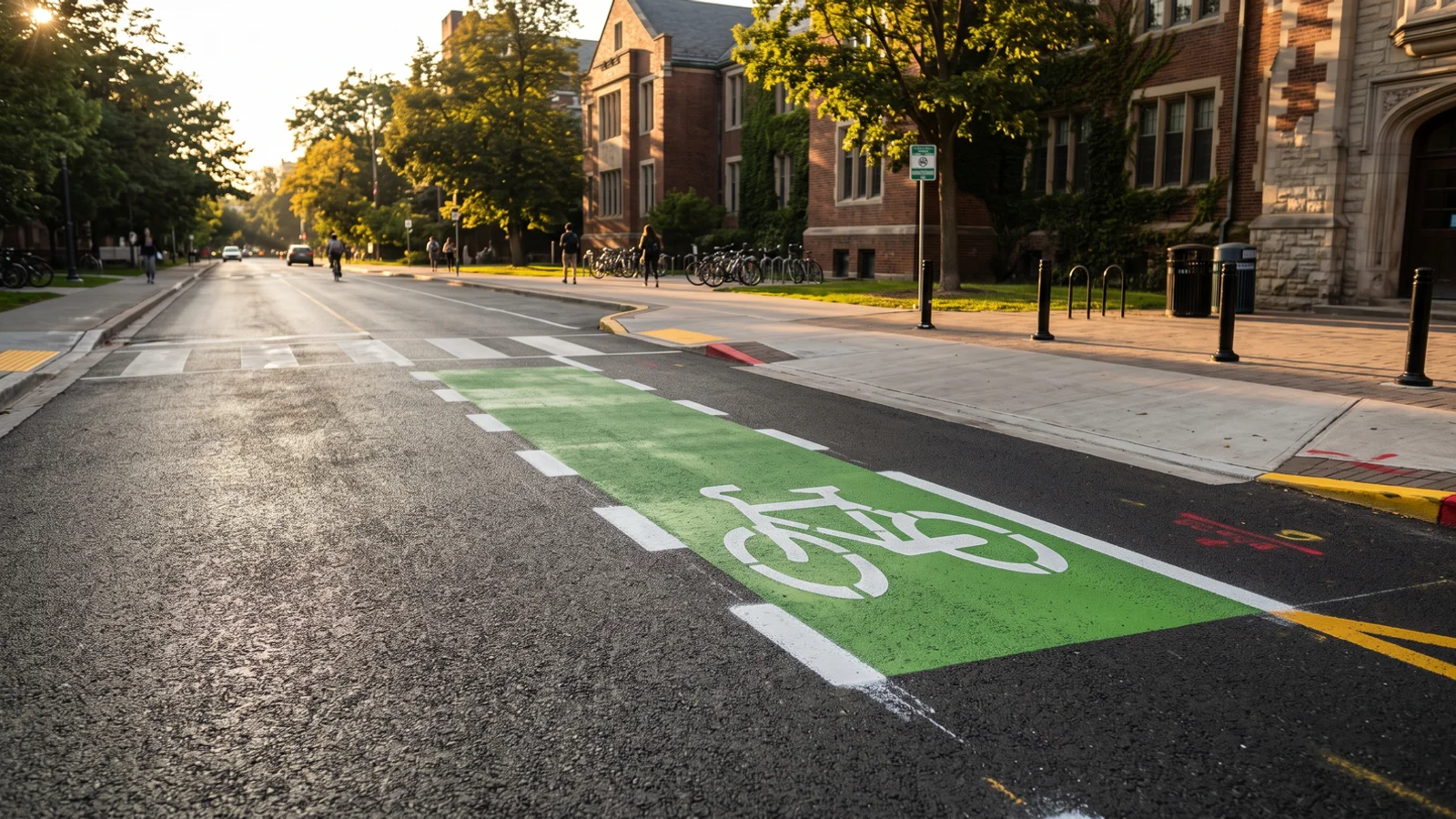
We lay bicycle symbol stencils, arrows, lane lines, buffer lines, and green conflict zones. This process follows OTM Book 11 for pavement markings and the 2021 updates to Ontario Traffic Manual Book 18. TAC references always guide the layout.
Let us walk you through the exact steps and materials used to get this done right.
Bike Lane Painting to OTM Book 11 Symbols and Buffers
Have you ever noticed how confusing a parking lot becomes when the cycling zones fade away?
Our team helps campuses, private roads, business parks, and municipal partners fix this exact problem. The Ontario Traffic Council updated Book 18 to prioritize advanced safety measures and separated infrastructure. This means clear markings are more critical than ever for local property owners.
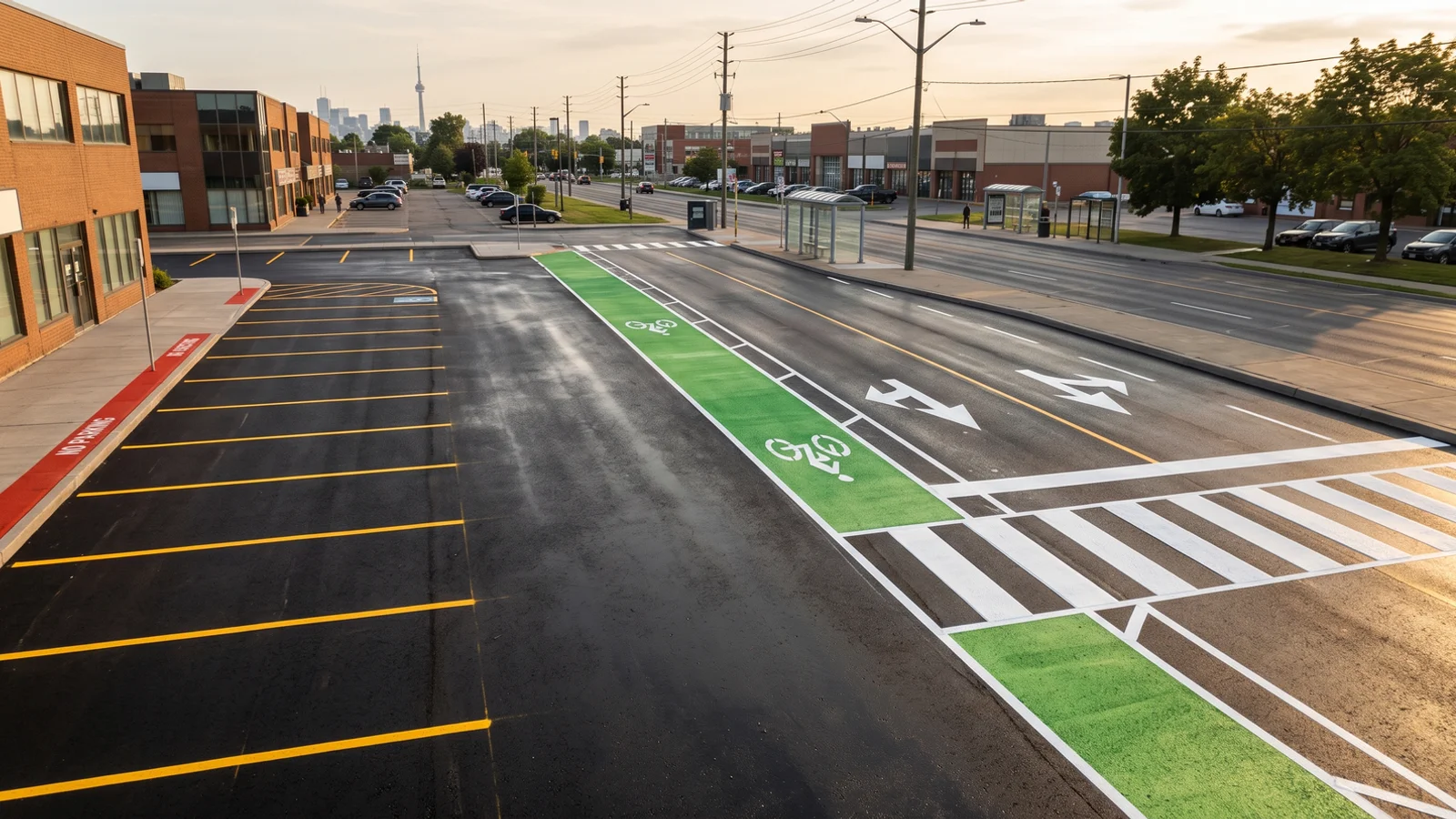
We apply bicycle symbol stencils, arrows, lane lines, buffer lines, and green conflict zones. The layout always follows OTM Book 11 for pavement markings and TAC references. These precise guidelines ensure cyclists and drivers can move safely across your property.
Our application process strictly adheres to the Ontario Traffic Manual Book 18 for cycling facilities. Using the right dimensions and symbols prevents accidents at busy intersections. Here are the core elements included in a standard layout:
- Standardized bicycle symbol stencils for clear lane identification
- Directional arrows to guide traffic flow smoothly
- Solid buffer lines to separate bikes from motorized vehicles
- High-visibility green conflict zones for intersections and driveways
Materials for Cycling Markings
Choosing the right material makes a massive difference in how long your lines actually last.
Our material selection balances durability, safety, and budget for your specific property needs. In Toronto, harsh winters and heavy traffic require durable solutions that can handle salt and plows. Methyl Methacrylate (MMA) is widely used by the city because it cures in just 30 minutes.
We recommend specific products based on the traffic volume of your road or campus. Busy crossings and driveways are always the first places where markings start to wear away. Using premium products in these high-traffic areas prevents you from needing constant touch-ups.
Our crews use a variety of specialized materials to get the best results. Here is a breakdown of the materials used for cycling markings:
- Paint for straight lane lines and buffers on lower-traffic roads.
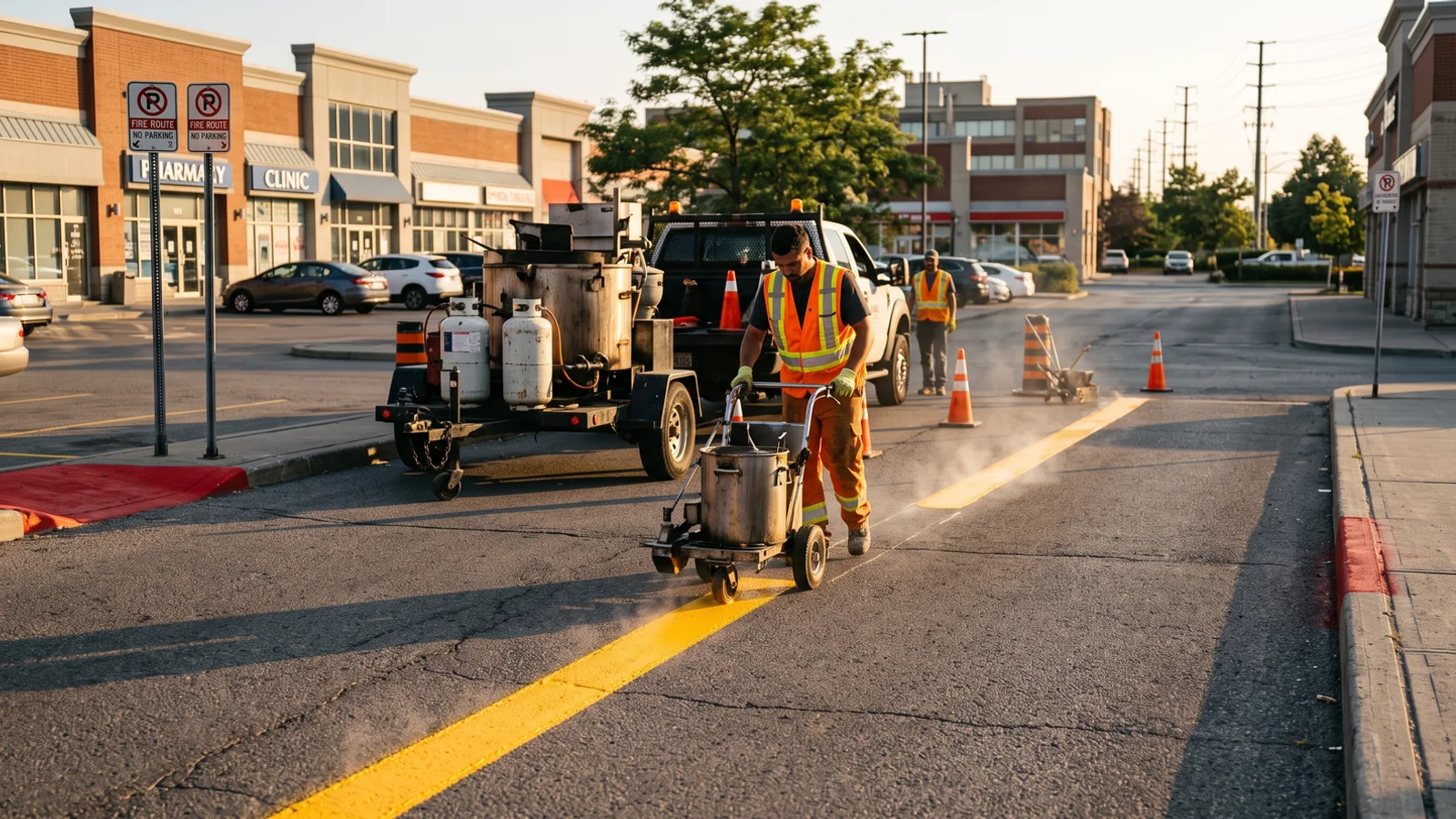
- Preformed cold-applied tape for symbols and conflict zones, lasting 5-7 years at $12-$25 per linear foot.
- MMA cold plastic with anti-skid aggregate for green surfaces that need to grip in the rain.
We often combine these options to keep your overall project costs totally sensible. Placing tape or MMA at the busy crossings and standard paint on the straightaways is the smartest strategy. This hybrid approach provides maximum safety right where it matters most.
Our team has created a simple comparison to help you understand the differences.
| Material Type | Best Application | Key Benefit |
|---|---|---|
| Standard Paint | Straight lane lines | Highly cost-effective for low traffic |
| Preformed Tape | Symbols and conflict zones | Lasts 5 to 7 years |
| MMA Cold Plastic | Green surfaces in rain | Superior anti-slip properties |
Scheduling Around Riders and Drivers
Closing down a busy route during peak hours is a massive headache for everyone involved.
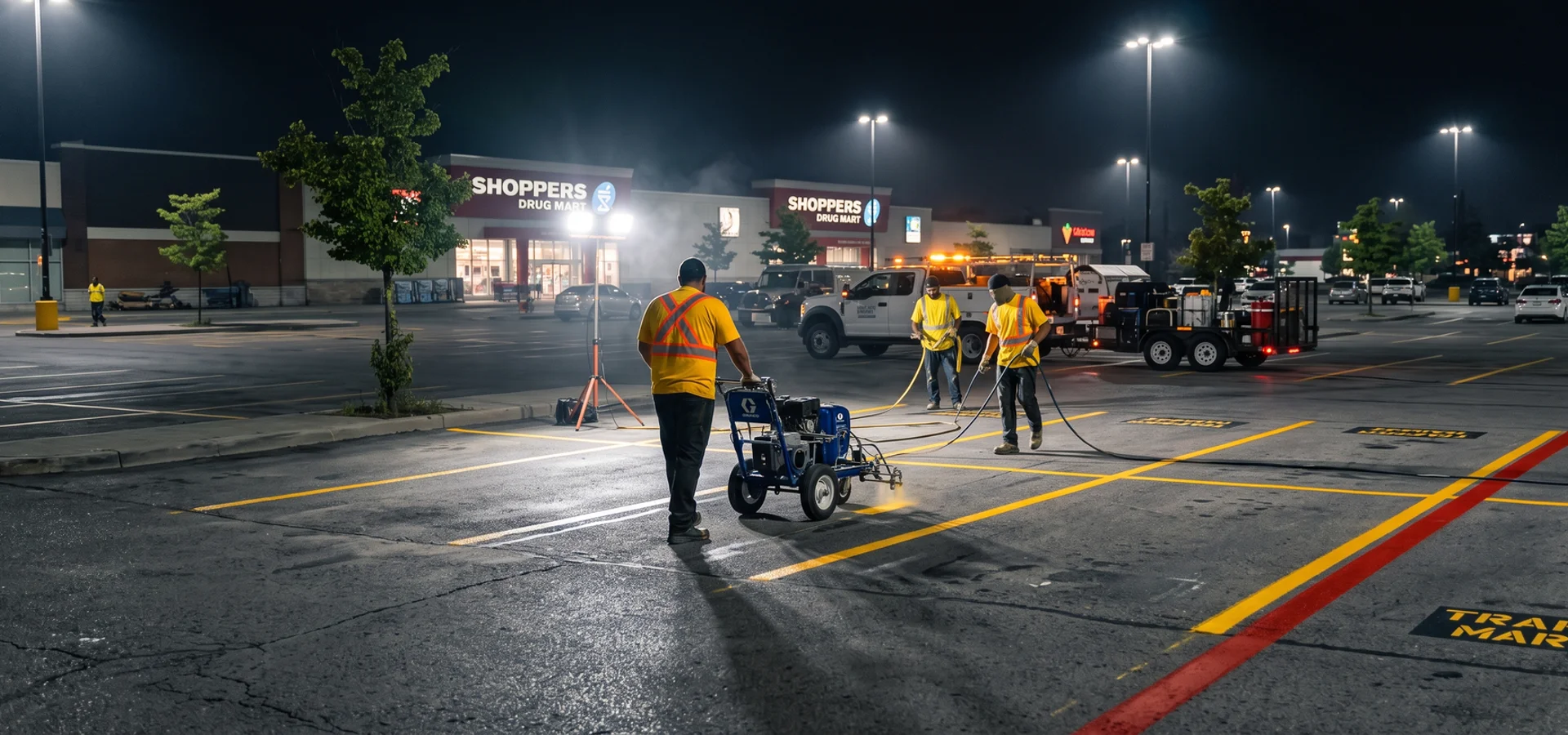
Our scheduling process is designed to minimize disruptions for both riders and drivers. The Toronto Noise Bylaw Chapter 591 restricts regular construction noise from 7:00 PM to 7:00 AM on weekdays. However, overnight road maintenance frequently qualifies for specific noise exemption permits.
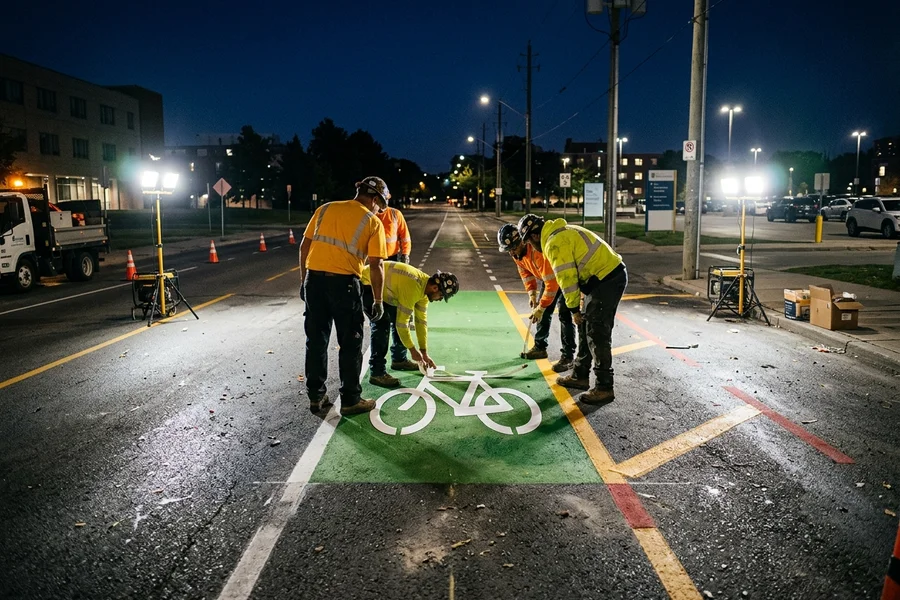
We handle the logistics so that your daily operations are never interrupted. Night work allows cycling routes to stay completely open during the day. Here is how the overnight process generally works:
- Filing for any necessary local noise exemption permits
- Setting out cones and traffic control for each section
- Applying the materials quickly while traffic is light
- Removing barriers as soon as the fast-curing materials dry
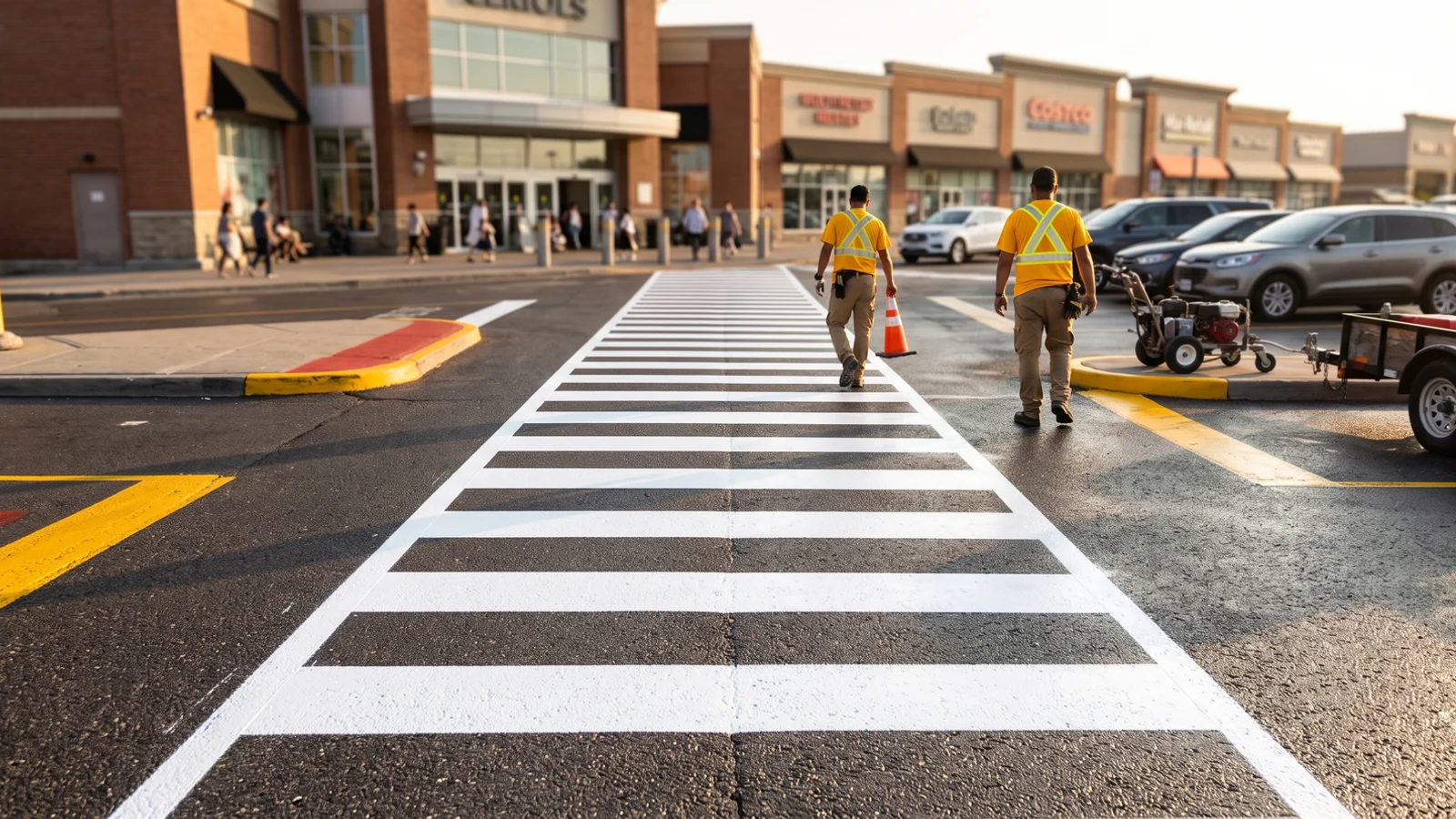
Our bike lane projects often include pedestrian crosswalk painting at the exact same intersections. Applying heavy-wear stop bars using thermoplastic line marking is another great way to improve safety. For a complete overview of materials and standards, you can easily check out our pavement marking page.
As a Toronto line painting contractor, we proudly provide these services across downtown Toronto and Etobicoke. A fresh application will completely transform the look and function of your property. You can request a cycling markings quote today to get started on your next project.