What Is Hot-Applied Thermoplastic?
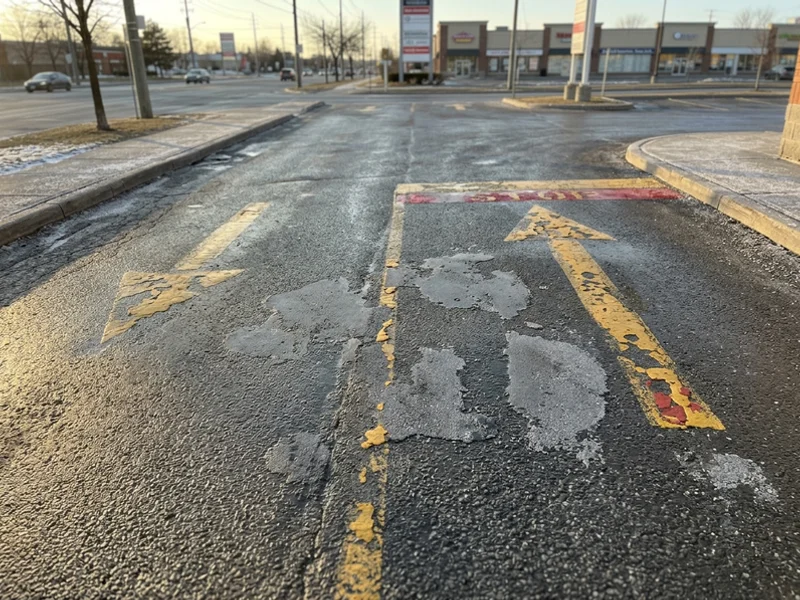
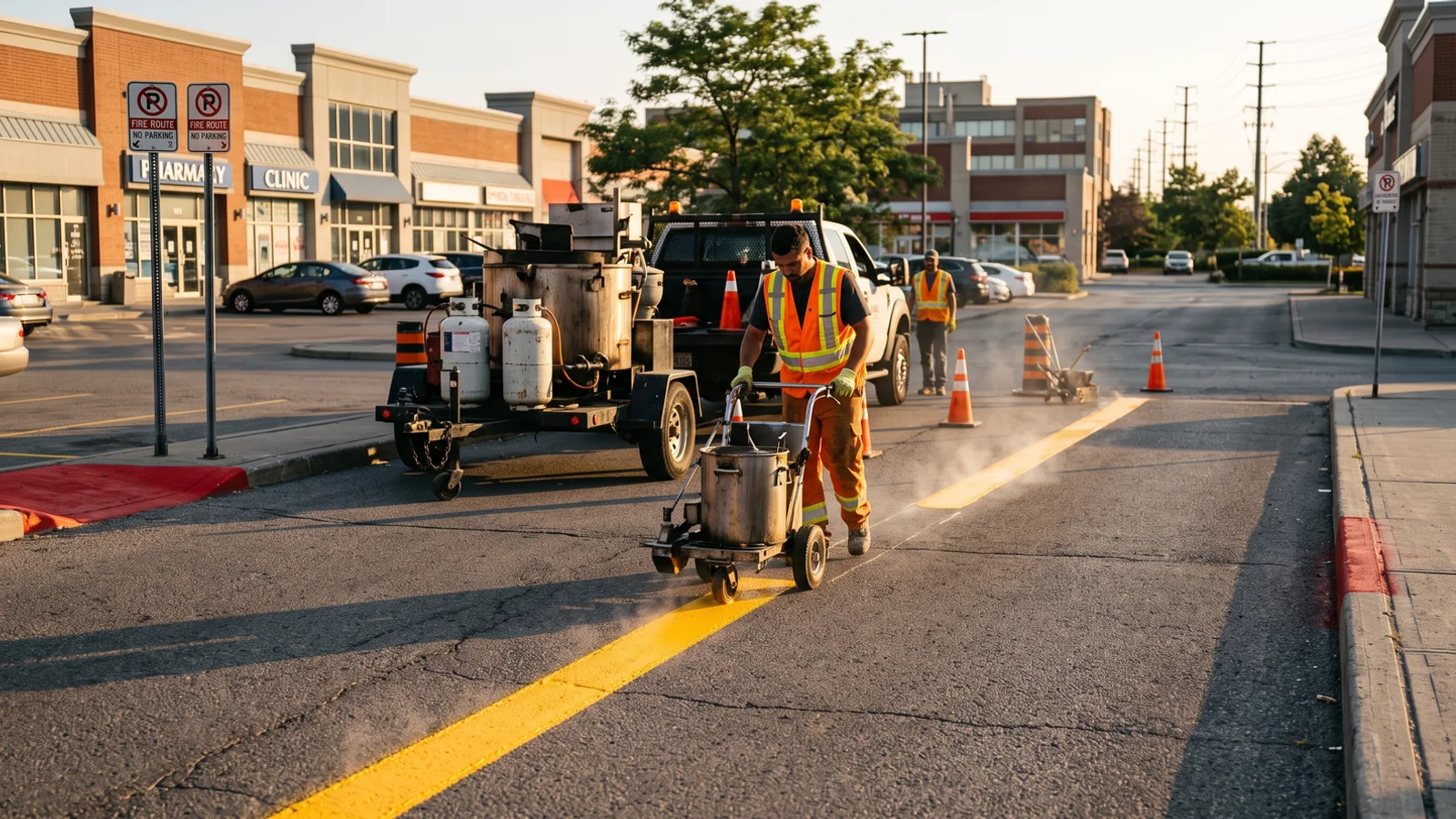
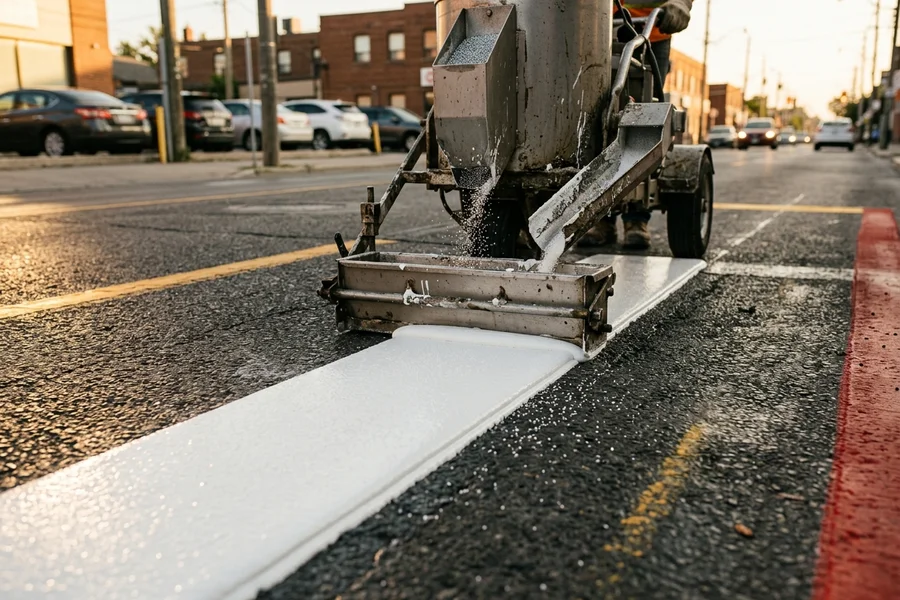
Thermoplastic line marking in Toronto uses a solid compound of resins, pigment, filler and glass beads. It is melted in a thermoplastic kettle and applied at about 400F. On asphalt it fuses with the surface instead of sitting on top like paint. We apply it with a screed box applicator for wide lines and symbols, and hand-liner extrusion for long runs. Drop-on glass beads go onto the hot surface for immediate retroreflectivity, measured in mcd/m2/lux. Intermix beads inside the material keep surfacing as the line wears.
The result is a line many times thicker than traffic paint. It is built for snowplows, salt and the 70-90 freeze-thaw cycles a Toronto winter brings. Alkyd thermoplastic meeting AASHTO M249 is our standard spec.
Where Thermoplastic Makes Sense
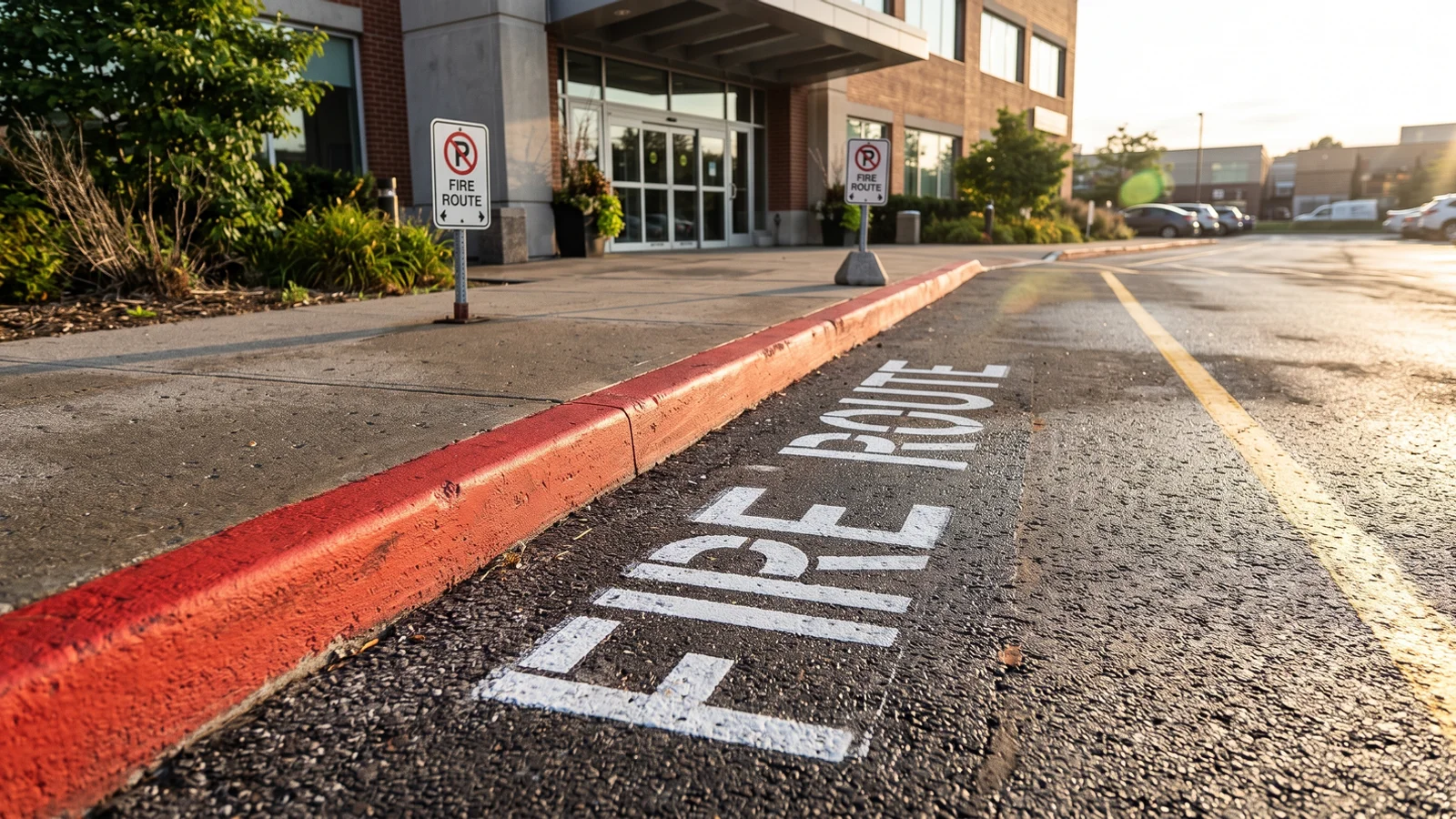
- Fire route marking that has to stay inspection-ready
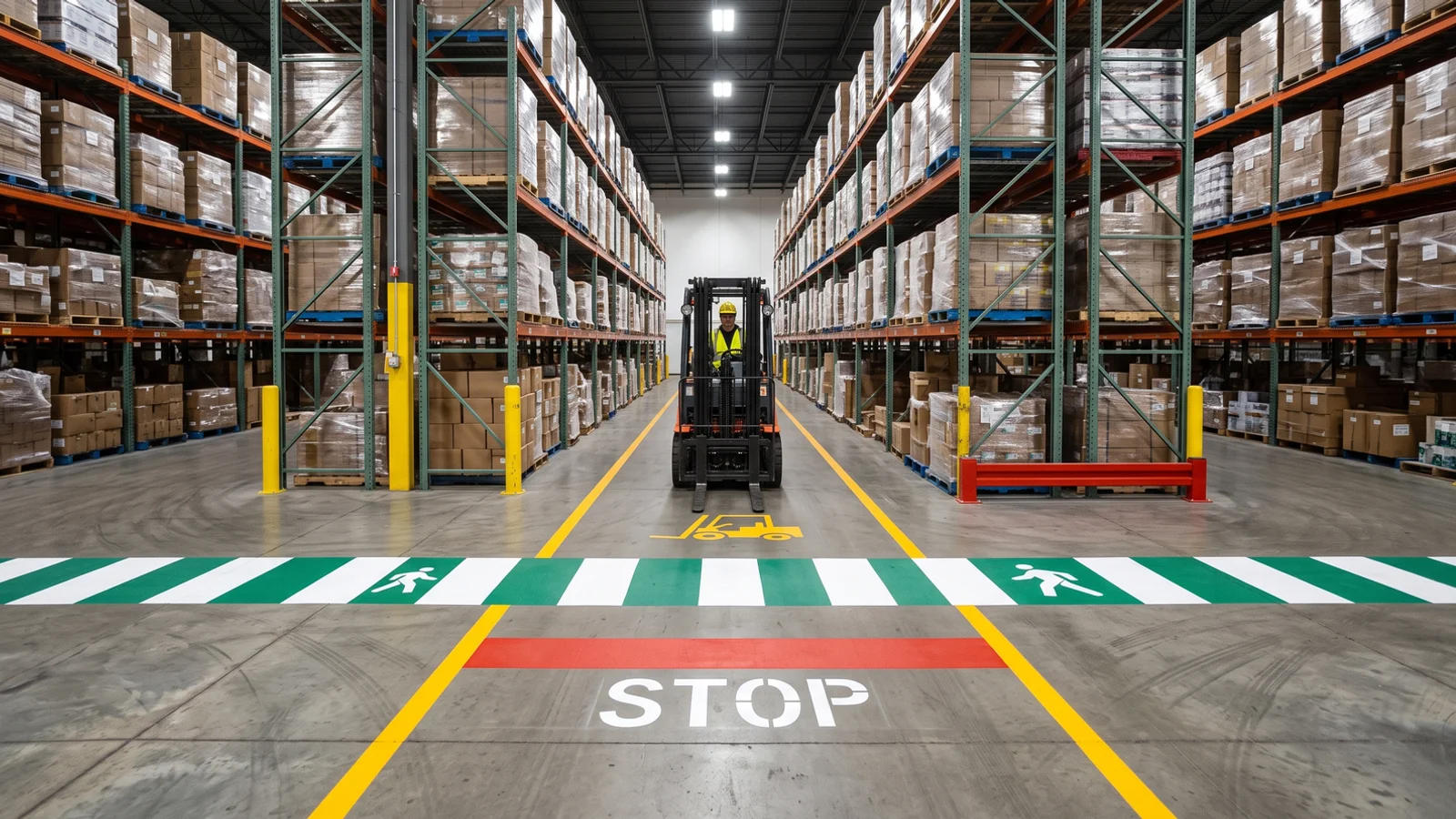
- Forklift lane safety marking and loading approaches
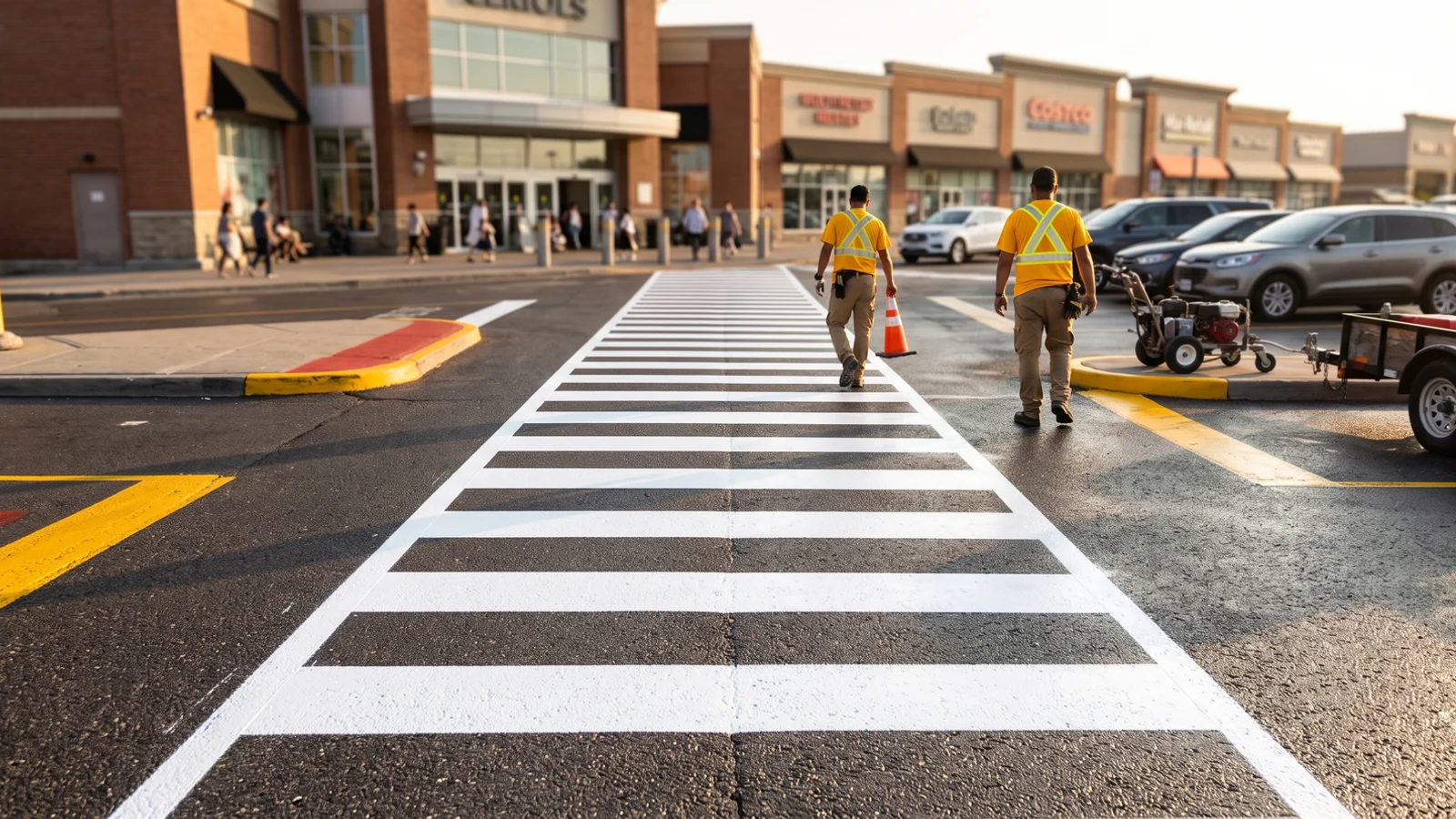
- Pedestrian crosswalk painting at plaza entrances and schools
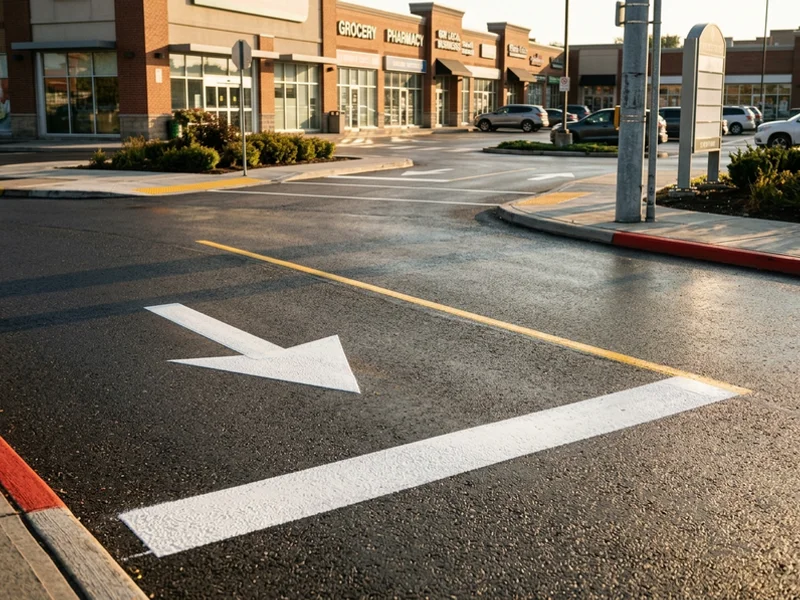
- Stop bars, arrows and symbols at the busiest turns in any lot
For the standard stalls at the back of a plaza, paint is still the smarter spend. Most of our quotes mix both.
Material Comparison: Paint vs Thermoplastic vs Tape
The comparison table below shows typical life, cure time and price for each material. Here is the short version. Paint is cheapest per application. Thermoplastic is cheapest per year in high-wear zones. Preformed cold-applied tape wins at crosswalks where five to seven years of life matters most.
What Affects Thermoplastic Pricing?
Line width, the share of arrows and lettering versus straight lines, surface condition and access all move the price within the $8-$18 per linear foot range. Removing old paint and pre-heating cold asphalt add prep time. You see each item on the written quote.
As a full-service line painting company in Toronto, we apply thermoplastic across the GTA, with regular work in Scarborough and Vaughan industrial yards. Compare costs on our pricing page or ask for a paint vs thermoplastic quote.